
PCOS, or Polycystic Ovary Syndrome, is a hormonal condition that can affect a woman’s periods, skin, hair growth and ovulation. Many women notice irregular periods, acne or unwanted facial hair but do not know whether these changes are related to PCOS. Understanding the early signs can help you seek the right medical advice.
PCOS Symptoms can appear differently in every woman. Some women experience only a few signs, while others have several symptoms together. Early assessment can help identify the cause and guide treatment.
If you notice changes in your menstrual cycle or other hormonal signs, consulting a Gynaecologist & IVF Specialist can help you understand whether further tests are needed. In this article, we explain the early signs, PCOS symptoms in unmarried girls, diagnostic tests and available treatment options in simple language.
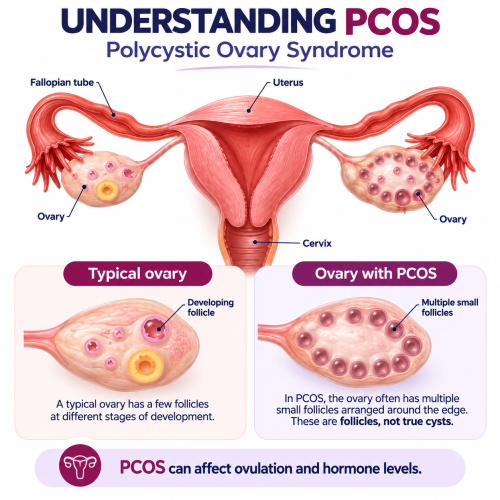
What Is PCOS?
PCOS stands for Polycystic Ovary Syndrome. It is a hormonal condition that can affect the ovaries and the regular release of eggs during the menstrual cycle.
Women with PCOS may have higher levels of androgens, which are hormones present in all women but may be elevated in some cases. The condition may also be associated with insulin resistance, which means the body does not respond to insulin as effectively as it should.
PCOS can affect women during their reproductive years. It may cause irregular periods, acne, unwanted hair growth and difficulty with ovulation.
Despite its name, having ovarian cysts is not necessary for a PCOS diagnosis. A doctor considers symptoms, medical history and appropriate investigations before confirming the condition.
What are the first signs of pcos
The first signs of PCOS may develop gradually. Some women first notice changes in their periods, while others experience acne, hair thinning or unwanted facial hair.
Here are the common signs to watch for.
1.Irregular or missed periods
Irregular periods are one of the common signs of PCOS. The condition may affect ovulation, making the menstrual cycle longer or less predictable.
You may notice that:
- Your periods come much later than expected.
- You miss periods for several weeks or months.
- Your menstrual cycle changes frequently.
- You have fewer periods than usual during the year.
However, irregular periods can also result from stress, thyroid problems, significant weight changes or other hormonal conditions.
If your periods are repeatedly irregular, consult a doctor instead of assuming that PCOS is the cause.
2.Acne and oily skin
Hormonal changes can increase oil production in the skin and contribute to acne.
You may experience:
- Repeated pimples on the face.
- Acne around the chin and jawline.
- Oily skin.
- Deep or painful pimples that keep returning.
Acne alone does not confirm PCOS. However, acne combined with irregular periods or excess facial hair may need a hormonal assessment.
3.Unwanted facial or body hair
Some women with PCOS develop thicker, darker hair on the chin, upper lip, chest or abdomen. This is called hirsutism.
It may happen because androgen levels are higher than usual or because the body is more sensitive to these hormones.
A small amount of facial hair can be normal. A noticeable increase in coarse hair, particularly alongside other hormonal changes, should be discussed with a doctor.
4.Hair thinning on the scalp
PCOS may cause gradual thinning of hair, especially near the top of the head or along the hair parting.
Some women notice increased hair fall or reduced hair thickness. However, iron deficiency, thyroid disorders and other conditions can also cause hair loss.
A medical assessment can help identify the actual cause.
5.Weight changes and dark skin patches
Some women with PCOS experience weight gain or find weight management difficult. However, PCOS can also affect women who are not overweight.
Dark, thickened skin around the neck, underarms or groin may be associated with insulin resistance.
These changes do not confirm PCOS on their own. A doctor can assess them along with your other symptoms.
When should you pay attention? If you notice several of these signs together, especially irregular periods and increasing facial hair or persistent acne, consider a medical consultation.
For women experiencing these changes, PCOS Treatment in Ahmedabad may involve an individual assessment and a treatment plan based on symptoms, medical history and overall health.
Pcos symptoms in unmarried girl
PCOS can affect unmarried girls and women. Marital status does not cause or prevent this condition. PCOS is related to hormonal and metabolic factors, not sexual activity.
The common PCOS symptoms in unmarried girls may include:
- Irregular or missed periods.
- Frequent acne and oily skin.
- Unwanted facial or body hair.
- Hair thinning on the scalp.
- Weight changes.
- Dark patches of skin around the neck or underarms.
Some girls first notice these changes during their teenage years. However, acne and irregular periods can also occur during normal puberty.
Doctors therefore consider the girl’s age, menstrual history and other symptoms before making a diagnosis.
Can an unmarried girl get tested for PCOS?
Yes. An unmarried girl or woman can be evaluated for PCOS in the same way as other patients, with tests chosen according to her age and symptoms.
The doctor may ask about periods, skin changes, hair growth, family history and weight changes. Blood tests may be recommended to assess hormone levels or rule out other conditions.
An internal examination is not automatically required to assess PCOS. The doctor decides which examinations are appropriate for the individual.
For teenagers, extra care is needed because normal puberty changes can resemble PCOS. An ultrasound alone should not be used to diagnose PCOS in adolescents.
If you are unmarried and worried about these symptoms, you can discuss your concerns privately with a gynaecologist. There is no need to feel embarrassed about seeking medical advice.
When Should You Get Tested for PCOS?
You should consider a medical consultation if you have persistent menstrual changes or other possible hormonal signs.
Seek advice if you:
- Frequently miss your periods.
- Have no period for around three months without a known reason.
- Have irregular periods along with persistent acne or excess facial hair.
- Notice increasing hair thinning or unwanted hair growth.
- Experience other hormonal changes that concern you.
Do not wait until every symptom appears. A doctor can assess your concerns even if you have only one or two symptoms.
If your periods stop suddenly, your symptoms develop rapidly, or you experience severe pelvic pain or unusually heavy bleeding, seek medical attention promptly. These symptoms may require evaluation for conditions other than PCOS.
Which Tests Are Used to Diagnose PCOS?
There is no single test that confirms PCOS in every woman. A diagnosis is made by assessing symptoms, medical history and appropriate investigations.
1.Medical history and menstrual cycle review
The doctor may ask:
- When did your first period start?
- How often do you get your periods?
- Have you missed any periods recently?
- Do you have acne or unwanted hair growth?
- Have you noticed hair thinning or weight changes?
- Is there a family history of PCOS or diabetes?
Keeping a record of your menstrual cycle can help your doctor understand your symptoms.
2.Blood tests
Blood tests may be recommended to assess hormone levels and rule out other conditions.
Depending on your symptoms, these may include tests for androgen levels, thyroid function and prolactin. Blood sugar and cholesterol checks may also be advised to assess metabolic health.
Not every woman needs the same tests. Your doctor will choose investigations according to your medical history and symptoms.
3.Pelvic ultrasound
A pelvic ultrasound may be used to examine the ovaries and uterus when appropriate.
However, an ultrasound alone cannot confirm PCOS. Some women with PCOS do not have a polycystic appearance of the ovaries, while some women without PCOS may have this appearance.
Ultrasound is generally not recommended as a diagnostic criterion for PCOS in adolescents because normal ovarian development can look similar.
4.Ruling out other hormonal conditions
Irregular periods, acne and unwanted hair growth can have causes other than PCOS. Your doctor may recommend tests to check for thyroid disorders, raised prolactin or other hormonal conditions.
If you also need a wider fertility evaluation, an infertility assessment may help investigate factors affecting ovulation or conception. Genetic testing is not a routine test for PCOS and is considered only when there is a separate medical reason.
Can PCOS Be Treated?
Yes. PCOS can often be managed with a treatment plan based on your symptoms, overall health and personal goals.
Healthy lifestyle habits
Healthy daily habits can support hormonal and metabolic health. These may include:
- Eating balanced meals with vegetables, protein, whole grains and healthy fats.
- Staying physically active through walking or other suitable exercise.
- Getting enough sleep.
- Avoiding crash diets and extreme weight-loss plans.
These habits can benefit women with PCOS regardless of their body size.
Medicines when needed
A doctor may prescribe medicines to help manage irregular periods, acne, unwanted hair growth or metabolic concerns.
The choice of medicine depends on your symptoms, medical history and whether you are planning a pregnancy. Do not take hormonal medicines or supplements without proper medical advice.
Fertility care when needed
PCOS can affect ovulation and make pregnancy more difficult for some women. However, many women with PCOS become pregnant naturally or with appropriate treatment.
Having PCOS does not automatically mean that you will experience infertility. Fertility care is considered when needed, based on an individual assessment.
Where Can You Consult a Gynaecologist for PCOS in Ahmedabad?
If you are experiencing possible PCOS symptoms, it is important to understand the cause rather than relying on self-diagnosis or self-medication.
Dr. Ladu Dewasi provides gynaecology and fertility care at Mayflower Women’s Hospital in Bopal, Ahmedabad. You can learn more about her background and services through the gynaecologist and infertility page.
A consultation can help you discuss irregular periods, acne, unwanted hair growth and other hormonal concerns. Your doctor can advise you about suitable tests and treatment options based on your individual needs.
If you would like to enquire about an appointment, contact Dr. Ladu Dewasi on WhatsApp.
Visit Dr. Ladu Dewasi’s clinic in Ahmedabad for personalized fertility and gynecology care.
Frequently Asked Questions
What are the most common PCOS symptoms?
Common signs include irregular periods, acne, unwanted facial hair, scalp hair thinning and weight changes. Symptoms vary from woman to woman.
Can an unmarried girl have PCOS?
Yes. PCOS can affect unmarried girls and women. Marital status and sexual activity do not determine whether someone develops PCOS.
Can PCOS be diagnosed with an ultrasound alone?
No. Doctors consider symptoms, medical history and appropriate tests. An ultrasound alone cannot confirm PCOS.
Can I have PCOS without weight gain?
Yes. PCOS can affect women of all body sizes. Weight gain is not necessary for diagnosis.
When should I see a doctor?
Consult a doctor if your periods are repeatedly irregular, you miss periods for several months, or you notice persistent acne, unwanted hair growth or hair thinning.
This article is for general educational purposes only. It does not replace a medical consultation, diagnosis or treatment. PCOS symptoms can overlap with other health conditions. Consult a qualified doctor for advice based on your individual symptoms.