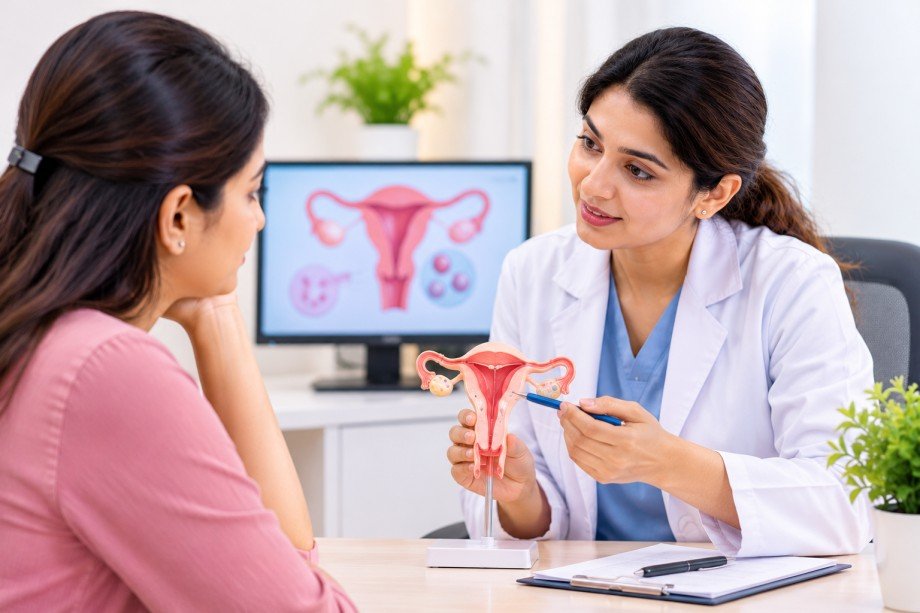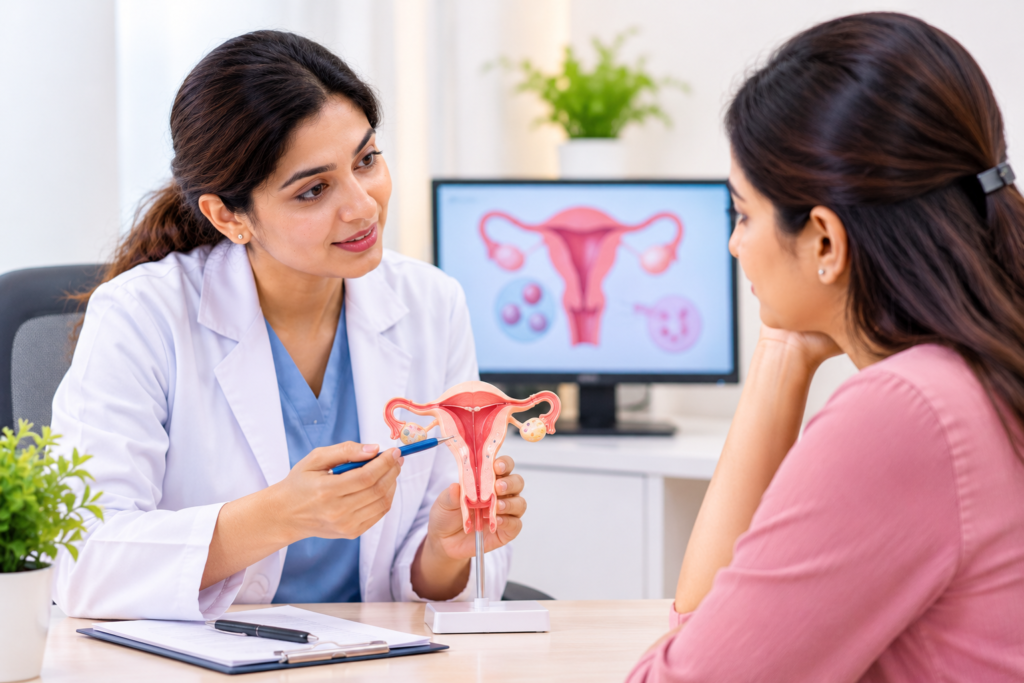
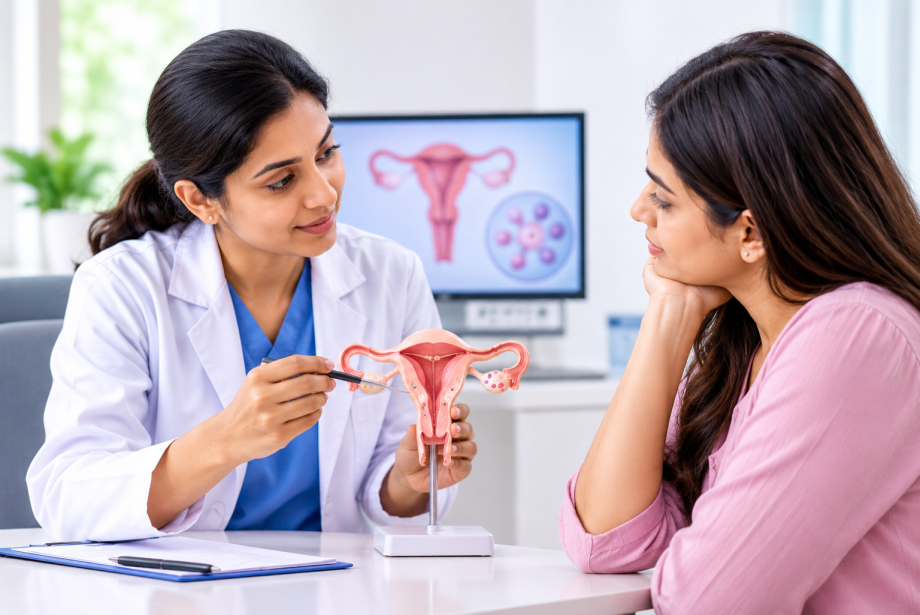
If you have PCOS and are finding it difficult to conceive, you may wonder whether IUI or IVF is the better treatment. Both are fertility treatments, but they work differently and are suitable for different situations. IUI may be considered when the main problem is irregular ovulation and other fertility factors are normal. IVF may be recommended when additional fertility problems are present or simpler treatments have not worked. Your doctor will decide based on your fertility assessment, age, medical history and treatment response.
How Does PCOS Affect Fertility?
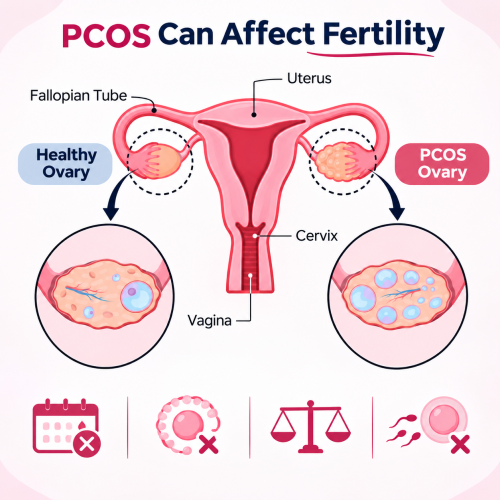
Polycystic ovary syndrome (PCOS) is a hormonal condition that can affect ovulation. Women with PCOS may have irregular periods, delayed ovulation or cycles in which an egg is not released.
When ovulation does not happen regularly, it can become difficult to predict the fertile days and achieve pregnancy naturally. However, having PCOS does not mean you cannot become pregnant. Many women with PCOS conceive naturally or with appropriate fertility treatment.
PCOS can also be associated with insulin resistance and other metabolic concerns, which may need attention before pregnancy.
If you want to understand the condition in more detail, read our guide on PCOS vs PCOD and their effects on periods and fertility.
What Is IUI Treatment?
Intrauterine insemination (IUI) is a fertility treatment in which specially prepared sperm is placed directly into the uterus around the time of ovulation.
For women with PCOS, IUI may be considered when irregular ovulation is the main fertility concern and other factors, such as sperm quality and fallopian tube health, are suitable.
The process usually involves:
- Ovulation assessment: Your doctor evaluates your menstrual cycle and ovulation pattern.
- Ovulation medicines: Medication may be prescribed to help an egg mature and release.
- Ultrasound monitoring: Scans help track follicle growth and decide the appropriate timing.
- Sperm preparation: The sperm sample is processed in the laboratory to select suitable sperm.
- Insemination: Prepared sperm is placed inside the uterus using a thin, flexible catheter.
IUI is usually a short procedure and does not require egg retrieval or embryo creation in a laboratory.
What Is IVF Treatment?
In vitro fertilisation (IVF) is a treatment in which eggs are collected from the ovaries and fertilised with sperm in a laboratory. The resulting embryo may then be transferred into the uterus.
For women with PCOS, IVF may be recommended when ovulation induction or other suitable treatments have not resulted in pregnancy. It may also be considered earlier when there are additional fertility concerns, such as blocked fallopian tubes or significant male-factor infertility.
The IVF process generally includes:
- Ovarian stimulation: Hormone injections help several follicles develop.
- Monitoring: Ultrasound scans and sometimes blood tests help monitor ovarian response.
- Egg retrieval: Mature eggs are collected through a short procedure under sedation.
- Fertilisation: Eggs are fertilised with sperm in the laboratory.
- Embryo development: The embryos are monitored as they develop.
- Embryo transfer: A suitable embryo may be transferred into the uterus.
Not every IVF cycle follows exactly the same plan. Some patients may have all suitable embryos frozen and transferred in a later cycle, depending on their response and clinical needs.
For more information, visit the IVF and ICSI treatment page.
IUI or IVF for PCOS: Which Is Better?
There is no single answer for every woman with PCOS. The choice depends on why pregnancy has not occurred and whether there are other fertility problems.
When May IUI Be Suitable?
IUI may be considered when:
- PCOS-related irregular ovulation is the main fertility concern.
- At least one fallopian tube is open and suitable for treatment.
- Sperm quality is adequate for IUI.
- Ovulation can be achieved with appropriate medication.
- There are no other significant fertility factors requiring IVF.
In some women with PCOS, doctors may first recommend ovulation induction with timed intercourse rather than IUI. IUI is not automatically required just because a woman has PCOS.
When May IVF Be Recommended?
IVF may be considered when:
- Ovulation induction and other appropriate treatments have not worked.
- Both fallopian tubes are blocked or there is another clear indication for IVF.
- Significant male-factor infertility is present.
- There are multiple fertility factors affecting conception.
- Age or other clinical circumstances make a different treatment approach more appropriate.
The 2023 International Evidence-based Guideline for PCOS recommends letrozole as the first-line medicine for ovulation induction in women with anovulatory infertility due to PCOS when no other infertility factors are present. IVF may be offered when first- or second-line ovulation induction treatments have failed, unless there is another reason to proceed directly to IVF.
This means that many women with PCOS do not need to start with IVF.
IUI vs IVF: Key Differences
| Factor | IUI | IVF |
|---|---|---|
| Treatment approach | Sperm is placed inside the uterus | Eggs are fertilised in a laboratory |
| Medication | May involve ovulation medicines | Usually involves ovarian stimulation injections |
| Egg retrieval | Not required | Required |
| Laboratory fertilisation | Not required | Required |
| Procedure | Usually short and simple | Involves several treatment stages |
| Monitoring | Ovulation and follicle monitoring | Ovarian stimulation and embryo monitoring |
| Treatment complexity | Generally lower | Generally higher |
| Cost | Usually lower per cycle | Usually higher per cycle |
The best option is not determined by cost or treatment complexity alone. Your fertility specialist should consider the likely benefit of each treatment for your specific condition.
Which Is More Painful: IUI or IVF?
This is a common concern among women considering fertility treatment. IUI is generally less uncomfortable than IVF because it does not involve egg retrieval or ovarian stimulation injections in the same way as an IVF cycle. However, the experience varies from person to person.
Does IUI Hurt?
IUI is usually not painful. During the procedure, a doctor inserts a speculum into the vagina and passes a thin catheter through the cervix to place prepared sperm inside the uterus.
Some women may experience:
- Mild discomfort when the speculum is inserted
- Slight cramping during or after insemination
- Temporary spotting in some cases
Most women can return to their usual routine shortly afterwards.
Is IVF Painful?
IVF involves more treatment steps, so there may be more opportunities for discomfort.
Some women experience:
- Mild pain or bruising at injection sites
- Bloating and abdominal heaviness during ovarian stimulation
- Discomfort after egg retrieval
- Mild cramping after embryo transfer
Egg retrieval is generally performed under sedation, so you should not feel significant pain during the procedure itself. Some discomfort may occur during recovery.
Which Treatment Is Easier to Tolerate?
IUI is usually physically simpler and less invasive. IVF involves injections, monitoring, egg retrieval and laboratory procedures, so it can be more demanding.
However, pain is not the only factor to consider. The treatment that offers the most appropriate chance of pregnancy for your circumstances should guide the decision.
Is IVF Riskier for Women With PCOS?
Women with PCOS may have a higher risk of ovarian hyperstimulation syndrome (OHSS) during IVF because their ovaries can respond strongly to fertility medicines.
OHSS can cause enlarged ovaries, abdominal swelling, pain and fluid shifts. Severe cases can require medical treatment.
This does not mean women with PCOS should avoid IVF. Fertility specialists can use individualised stimulation protocols, careful monitoring and other preventive measures to reduce the risk.
In selected cases, the doctor may recommend freezing suitable embryos and transferring one in a later cycle rather than proceeding with a fresh embryo transfer.
Single embryo transfer is also important when appropriate because it can reduce the risk of multiple pregnancy.
What Tests Are Needed Before Choosing IUI or IVF?
Before recommending treatment, your fertility specialist may assess both partners. The tests depend on your medical history and previous fertility treatment.
Common investigations include:
- Ovulation assessment: To understand whether and when you release an egg.
- Hormone tests: These may include AMH, thyroid function and other tests when indicated.
- Pelvic ultrasound: To assess the ovaries, uterus and follicle development.
- Fallopian tube assessment: To check whether the tubes are open, when appropriate.
- Semen analysis: To evaluate sperm count, movement and shape.
Not every woman needs every test. The doctor selects investigations based on the information needed to make a treatment decision.
You can read more about tests performed during an infertility assessment.
Can Women With PCOS Get Pregnant Without IVF?
Yes. Many women with PCOS conceive without IVF.
If irregular ovulation is the main issue and there are no other significant fertility factors, a doctor may recommend lifestyle support where appropriate and ovulation-inducing medication.
Letrozole is recommended as the first-line pharmacological treatment for anovulatory infertility associated with PCOS when no other infertility factors are present. Depending on the response, the doctor may consider other treatment options.
The number of treatment cycles and the next step depend on age, ovulation response, sperm results, fallopian tube health and other individual factors.
Do not start fertility medicines without medical advice. Treatment needs monitoring to reduce the risk of complications, including the development of too many follicles.
How Do You Decide Between IUI and IVF?
The decision should be based on a complete fertility evaluation rather than the PCOS diagnosis alone.
During your consultation, your doctor may discuss:
- Your age and how long you have been trying to conceive
- Whether you ovulate regularly
- Your ovarian reserve and ultrasound findings
- Fallopian tube health
- Your partner’s semen analysis
- Previous ovulation induction or IUI results
- Any additional medical conditions
- Your treatment preferences, time and budget
For some women, ovulation induction may be the first step. Others may benefit from IUI, while IVF may be more appropriate when additional fertility factors are present.
Considering IUI or IVF Treatment for PCOS in Ahmedabad?
PCOS does not mean that IVF is your only option. The right fertility treatment depends on the reason you are having difficulty conceiving and how your body responds to treatment.
Dr. Ladu Dewasi, Consultant Gynaecologist and Infertility Specialist at Mayflower Women’s Hospital, Bopal, Ahmedabad, can help evaluate your fertility concerns and discuss suitable treatment options.
Visit Dr. Ladu Dewasi’s clinic in Ahmedabad for personalized fertility and gynecology care.
Frequently Asked Questions
Is IUI better than IVF for PCOS?
IUI may be suitable when irregular ovulation is the main issue and other fertility factors are normal. IVF may be recommended when other fertility problems are present or simpler treatments have not worked.
Can I go directly for IVF if I have PCOS?
Yes, in certain situations. IVF may be considered when there is an additional indication, such as blocked fallopian tubes or significant male-factor infertility, or when earlier treatments have failed.
How many IUI cycles should I try before IVF?
There is no fixed number for everyone. Your doctor will consider your age, fertility test results, previous response and other factors before advising whether to continue IUI or move to IVF.
Is IUI less painful than IVF?
Generally, yes. IUI usually causes little or no pain, although mild cramping may occur. IVF involves more steps, including injections and egg retrieval, which may cause greater discomfort.
Does PCOS reduce IVF success?
PCOS does not automatically mean IVF will be unsuccessful. Many women with PCOS have successful IVF treatment. However, ovarian response and the risk of OHSS need careful assessment and management.
Medical Disclaimer
This article is for general educational purposes only and should not replace professional medical advice, diagnosis or treatment. Fertility treatment decisions depend on individual medical findings. Consult a qualified fertility specialist before starting any treatment.
About the Author
Dr. Ladu Dewasi is a Consultant Gynaecologist and Infertility Specialist at Mayflower Women’s Hospital, Bopal, Ahmedabad. She provides consultations for women’s reproductive health and fertility-related concerns.
Medical Research References
Fertility Science and Research – Good Clinical Practice Recommendations on Management of Infertility in Patients from India with PCOS ( https://fertilityscienceresearch.org/good-clinical-practice-recommendations-on-management-of-infertility-in-patients-from-india-with-polycystic-ovary-syndrome/ )
Indian Fertility Society – Good Clinical Practice Recommendations for PCOS and Infertility ( https://indianfertilitysociety.org/pdf/GCPR_PCOS_InFertility.pdf )
Journal of Human Reproductive Sciences – Prevalence of Polycystic Ovarian Syndrome, Phenotypes and Their Ovulation Response to Sequential Letrozole Dose Escalation Among Infertile Women at a Tertiary Care Centre in Southern India ( https://pubmed.ncbi.nlm.nih.gov/35494195/ )
Journal of Obstetrics and Gynaecology of India – A Randomised Comparative Study of Standard IUI and Fallopian Tube Sperm Perfusion for Clinical Pregnancy ( https://pubmed.ncbi.nlm.nih.gov/35928080/ )
The Journal of Obstetrics and Gynaecology of India – Comparison of Effectiveness of Different Protocols Used for Controlled Ovarian Hyperstimulation in Intrauterine Insemination Cycle ( https://www.jogi.co.in/article/s2f4c4/comparison-of-effectiveness-of-different-protocols-used-for-controlled-ovarian-hyperstimulation-in-intrauterine-insemination-cycle )
KD Hospital, Ahmedabad – IUI: Patient Information Leaflet ( https://kdhospital.co.in/pdfs/patient_information_leaflets/IUI.pdf )